
The Future of AI in Architectural Practice
Most conversations about AI's future in architecture start with generation — AI that designs a facade, proposes a floor plan, invents a form from a prompt. It's the version that makes for good demos and better headlines. It's also probably not where the next several years of practical change actually happen.
The more likely future is less dramatic and considerably more useful: AI that lives inside the tools architects already use, watching the model, understanding intent, and handling the layer of work that sits between a decision and a finished drawing set. Not a replacement for design thinking. A layer of support underneath it.
From generative to embedded
The first wave of AI in architecture was mostly generative — image tools that produce concept renders, form studies, mood boards. Useful for exploration, largely disconnected from the actual working model. A rendering isn't a building, and a prompt isn't a decision that survives contact with code requirements, structural constraints, and client feedback.
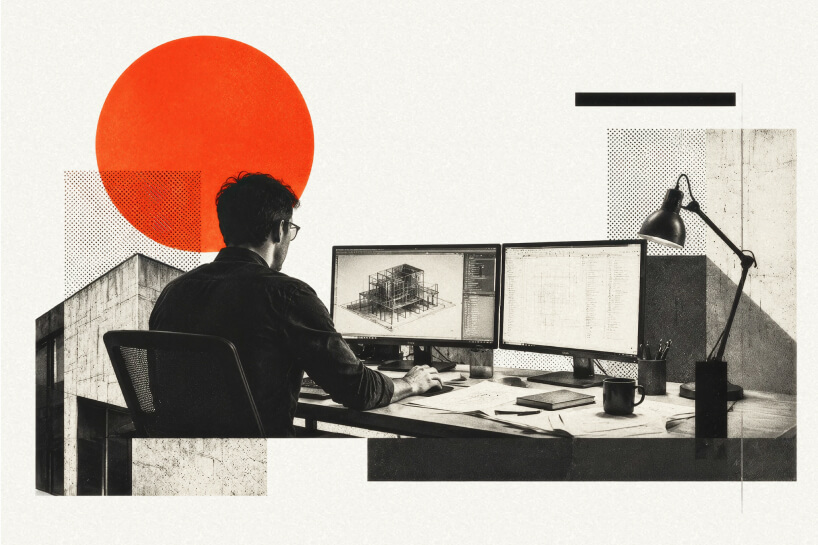
The next wave looks different: AI embedded directly inside the modelling environment, reading actual geometry instead of generating an image of what geometry might look like. This shift matters because it changes what the AI can be responsible for. A tool that only sees a prompt can only suggest. A tool that sees the model — the real one, mid-project — can advise on it, flag problems in it, and eventually act on it with permission.
What "understanding intent" will start to mean
Embedded AI's real value isn't speed. It's context. A tool that watches a model over time starts to understand not just what's there, but what's supposed to be there — which naming pattern this firm uses, which clearances this project needs, which detail this practice always calls out the same way. That's a very different capability than a generic assistant that has to be re-briefed every time.
As this kind of contextual understanding matures, the practical use cases shift from "generate an idea" to "catch what's inconsistent," "flag what's about to become a problem," and "apply the standard the same way it's always been applied." None of that is glamorous. All of it is the work that currently eats a design team's week.
The trust question that will define adoption
The limiting factor for AI in architectural practice isn't going to be capability. It's going to be trust — and trust is earned through control, not through impressive output. A tool that quietly edits a model without oversight will get uninstalled the first time it gets something wrong. A tool that flags what it sees, explains why, and only acts with explicit approval earns the right to be relied on over time.
This is likely to shape the next few years more than any generative breakthrough: not "can AI design," but "can AI be trusted to work inside a live project without supervision at every step." The firms that get comfortable with AI first won't be the ones chasing the most capable model. They'll be the ones that found a workflow where oversight is built in from the start, so trust compounds instead of resetting with every new tool.
What doesn't change
Judgment stays with the architect. Client relationships stay with the architect. The decisions that actually differentiate a building — the ones that come from taste, context, and accountability — aren't the target of any credible near-term AI development in this space. What's changing is everything underneath those decisions: less manual coordination, fewer missed inconsistencies, more of the week spent on work that required a person in the first place.
The future of AI in architectural practice probably won't look like a machine designing buildings. It will look like a much quieter shift — AI that lives inside the tools architects already trust, earns the right to act through consistent, transparent behavior, and hands back hours that used to disappear into busywork.

SEE WHAT HERON CAN DO IN YOUR MODEL